
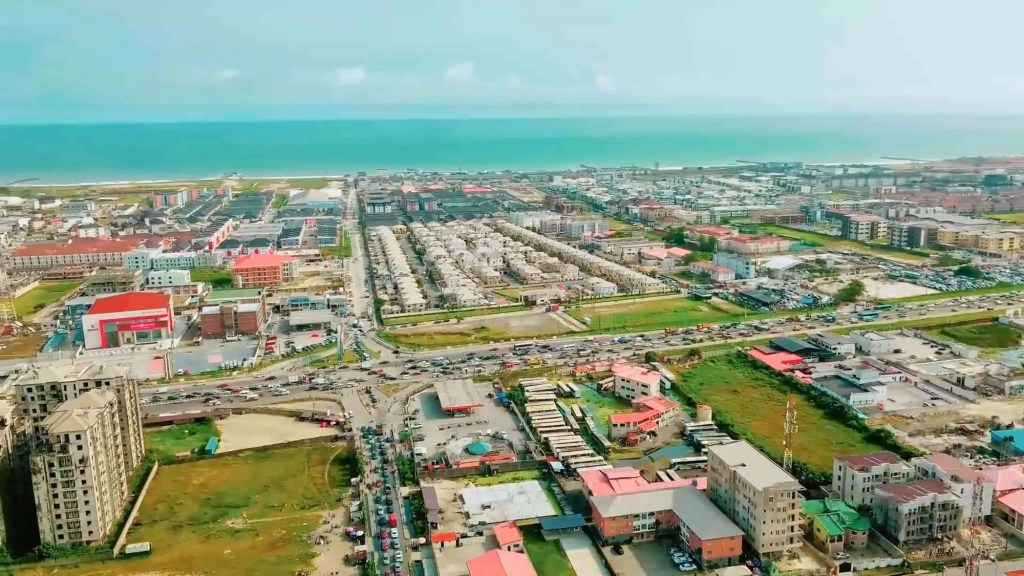
The Lagos State Government has unveiled an ambitious 20-year development plan to transform Ibeju-Lekki into a thriving tourism and industrial hub, signalling a major economic boost for the region. This strategic initiative aims to unlock the area’s vast potential, drive growth, and create new opportunities for investment, employment, and economic development. As one of Africa’s most populous and dynamic cities, Lagos’s vision for Ibeju-Lekki is set to redefine the state’s economic landscape and cement its position as a hub for business and innovation.
Lagos State launched a comprehensive 20-year development plan (2024–2044) on Friday, with the goal of establishing Ibeju-Lekki as a dynamic and globally competitive urban hub.
The plan, which focuses on tourism, housing, agriculture, and industrial development, aims to stimulate economic growth and improve the quality of life for residents, according to NAN.
Dr. Oluyinka Olumide, Commissioner for Physical Planning and Urban Development, presented the plan during the final stakeholders’ meeting at the Lekki Local Council Development Area (LCDA) Secretariat.
Olumide explained that the session was convened to ratify the provisions of the newly proposed Ibeju-Lekki Model City Plan.
He emphasized that this plan represents a significant milestone in the development of Ibeju-Lekki, which has been recognized as an emerging economic hub within Lagos State.
“The 20-year plan is designed to create a sustainable, flexible, and dynamic global community.
“It seeks to harness the area’s potential in agriculture, tourism, the blue economy, and marine activities,” he explained
Highlighting the area’s rapid development and strategic significance within Lagos, he explained that the government initiated a review of the existing Lekki Comprehensive Master Plan.
“This led to the development of a standalone Ibeju-Lekki Model City Plan tailored to the area’s unique challenges and opportunities.
Olumide stated that the primary objective is to develop Ibeju-Lekki into a secure, inclusive, and well-planned urban environment where residents can live, work, play, and prosper.
He added that the plan aligns with Governor Babajide Sanwo-Olu’s T.H.E.M.E.S + Agenda, which aims to establish Lagos as a 21st-century economy.
“And this aligns with major infrastructural projects in the area, such as the Dangote Refinery and Petrochemical Plant, Lekki Free Trade Zone, Lekki Deep Seaport, and Alaro City.
“Other transformative projects within the axis include the proposed Lekki International Airport, the Green-Line Rail Project, and the Lagos-Calabar Coastal Highway.
“To fully unlock the area’s potential, the Model City Plan prioritises the provision of mass transit systems, youth empowerment initiatives, social inclusion, technology integration, and holistic community development.”
Olumide urged all stakeholders to support and contribute to the plan’s implementation, emphasizing its reflection of the government’s vision for sustainable, economically vibrant, and inclusive urban development.
The Permanent Secretary, Office of Physical Planning, Mr Oluwole Sotire, then presented details of the plan. Sotire explained that the plan was submitted for final ratification after approval by the ministry and the completion of previous phases by project consultants, MOA Planners Ltd.
He outlined the project’s structured process, which included an inception report, a baseline study, a draft final plan, and a 28-day public inspection from February 26 to April 1, 2024, at five key locations
“The Ibeju-Lekki and Lekki LCDA Secretariats, Epe Local Government Secretariat, LASPPPPA Headquarters, and the Ministry of Physical Planning and Urban Development.”
Both Abdulahi Oluwa and Rasak Kasali, Chairmen of Ibeju-Lekki LCDA and Lekki LCDA respectively, conveyed their satisfaction with the boundary delineation outlined in the plan. They also jointly requested a one-month extension to contribute additional insights.
The meeting, which saw significant participation from traditional rulers, former council chairmen, community leaders, market representatives, and other stakeholders, as reported by NAN, yielded valuable feedback and suggestions. These will be reviewed for inclusion in the final plan to ensure they accurately represent the desires of the Ibeju-Lekki people.
 The Fount
Leave a comment