
In a powerful display of international solidarity, dozens of countries have come together to reaffirm their unwavering support for the International Criminal Court (ICC), following the Trump administration’s imposition of sanctions on the tribunal. This bold move sends a resounding message that the global community will not be intimidated by attempts to undermine the rule of law and accountability for human rights abuses. By standing firmly behind the ICC, these nations are upholding the principles of justice, equality, and human dignity that are essential to a more peaceful and just world. As the ICC continues to play a vital role in prosecuting war crimes, crimes against humanity, and genocide, this show of international support serves as a beacon of hope for victims and survivors of atrocities worldwide.
Many countries have shown strong support for the International Criminal Court (ICC) following sanctions imposed on its staff by U.S. President Donald Trump.
A majority of member states, including the United Kingdom, Germany, and France, affirmed that the ICC is an ‘essential part of the international justice system’.
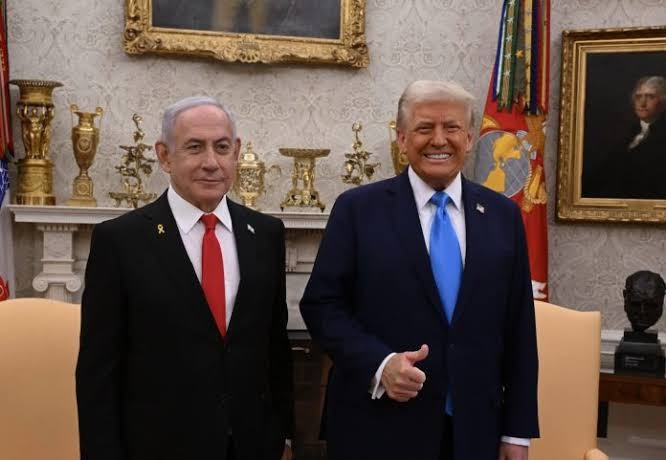
Former President Trump announced sanctions following a meeting with Israeli Prime Minister Benjamin Netanyahu, who was the first foreign leader to visit him since returning to power.
Last year, the International Criminal Court (ICC) issued an arrest warrant for Netanyahu due to alleged war crimes in Gaza, which Israel denies. The ICC also issued a warrant for a Hamas commander. The United States has condemned the court’s perceived “shameful moral equivalency” between Israel and Hamas.
The United States and Israel do not recognize the authority of the International Criminal Court (ICC), which is the only global court with the power to prosecute individuals for genocide, crimes against humanity, and war crimes. The ICC has previously initiated investigations into U.S. citizens as well.
The ICC consists of 125 member states worldwide, including the United Kingdom and many European nations.
On Friday, the UK, France, and Germany were among the 79 signatories of a joint statement condemning Trump’s executive order. Notably, Australia, the Czech Republic, Hungary, and Italy did not sign the statement.
On Friday, the International Criminal Court (ICC) called on its member states and global civil society to “stand united for justice and fundamental human rights.”
The ICC committed to continuing its efforts to “provide justice and hope to millions of innocent victims of atrocities around the world.”
Last year, the ICC issued arrest warrants for Israeli leaders allied with the United States, as well as a Hamas commander, in connection with the ongoing conflict in Gaza.
ICC prosecutors have stated that there are “reasonable grounds” to suggest that Prime Minister Netanyahu, his former defense minister Yoav Gallant, and Mohammed Deif of Hamas, who was killed last year, bear “criminal responsibility for alleged war crimes and crimes against humanity.”
A White House memo released on Thursday accused the International Criminal Court (ICC) of creating a “shameful moral equivalency” between Hamas and Israel by issuing warrants for both at the same time.
Former President Trump’s order stated that the ICC’s recent actions set a “dangerous precedent” that threatens to “infringe upon the sovereignty of the United States.” It argued that the ICC undermines the national security and foreign policy efforts of the U.S. and its allies.
The order also emphasized that the U.S. and Israel “are thriving democracies with militaries that strictly adhere to the laws of war.”
The sanctions were announced while Israeli Prime Minister Netanyahu was visiting Washington.
The list of individuals affected by the sanctions has not yet been disclosed, but they may target those involved in ICC investigations. Potential sanctions could include financial restrictions and visa limitations placed on individuals and their families.
The court’s technical and IT operations, including evidence gathering, could be impacted as well. Observers have expressed concerns that victims of alleged atrocities may be reluctant to testify.
Luis Moreno Ocampo, the court’s inaugural chief prosecutor, told the BBC that the global response will be crucial. He stated, “It’s a challenge for all the state parties – for Europe, the UK, South Africa, Argentina, Brazil, Japan, New Zealand, and Australia. Will they allow Mr. Trump to become the global president?”
The United Nations has called for the reversal of the measure, while European Commission President Ursula von der Leyen emphasized that the International Criminal Court (ICC) “must be able to freely pursue the fight against global impunity.”
In contrast, Israeli Foreign Minister Gideon Saar expressed strong support for Trump’s executive order. He argued that the ICC’s actions are “immoral and have no legal basis,” accusing the court of not operating by international law.
The United States has consistently rejected any jurisdiction of the International Criminal Court (ICC) over American officials or citizens. The U.S. has also accused the court of imposing restrictions on Israel’s right to self-defence while overlooking the actions of Iran and anti-Israel groups.
During his first term in office, President Trump imposed sanctions on ICC officials who were investigating whether U.S. forces had committed war crimes in Afghanistan. These sanctions included a travel ban and asset freezes against former chief prosecutor Fatou Bensouda.
President Joe Biden’s administration lifted those sanctions. However, in the final weeks of his tenure, Biden criticized the ICC’s warrant for Israeli Prime Minister Benjamin Netanyahu, calling it “outrageous” and asserting that there was no equivalence between Israel and Hamas.
In response to what they labelled as attempts to challenge the ICC’s authority, nine countries—including South Africa and Malaysia—formed the Hague Group last month to defend the court and its rulings.
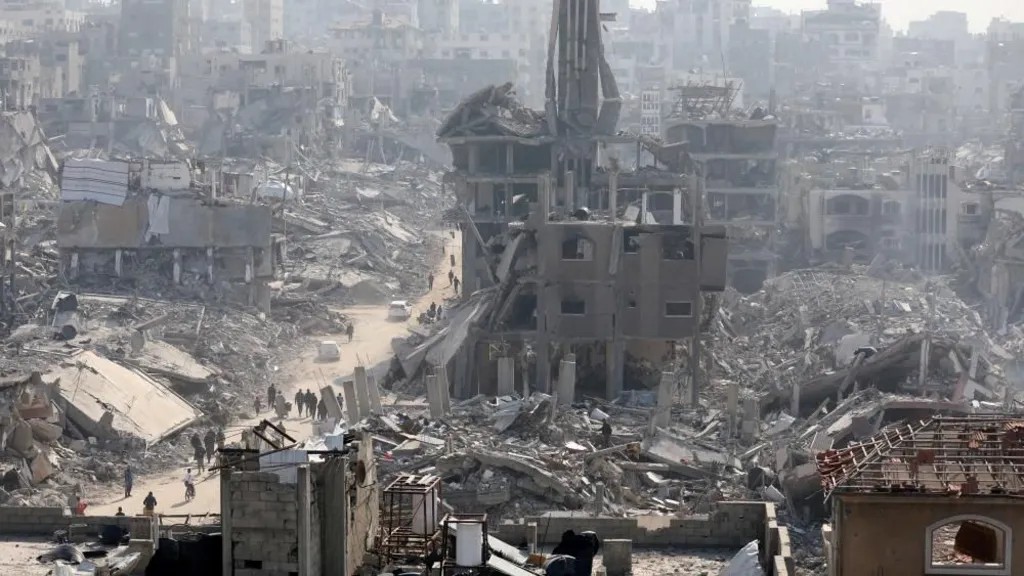
This comes after he announced a plan for the US to “take over” Gaza, resettle its Palestinian population, and transform the area into the “Riviera of the Middle East.”
Following condemnation from Arab leaders and the UN regarding the idea, the US president reiterated it on his Truth Social platform on Thursday.
 The Fount
Leave a comment