
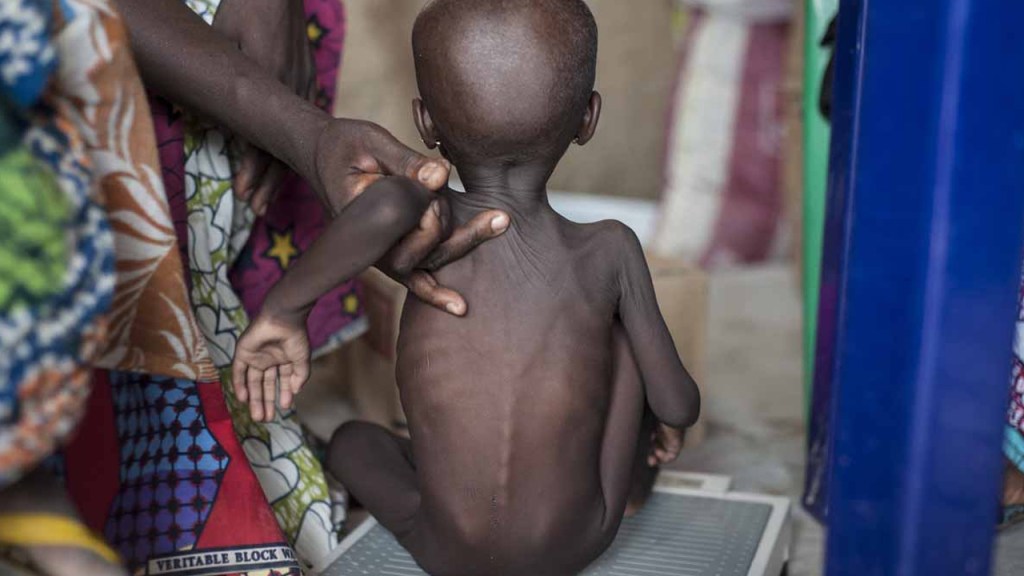
In a disturbing turn of events, Nigeria has tragically surpassed war-ridden Sudan to become the African nation with the highest number of malnourished children, according to a recent UNICEF report. This heartbreaking reality underscores the severity of Nigeria’s nutrition crisis and highlights the urgent need for comprehensive interventions to address the root causes of malnutrition. As the situation continues to deteriorate, it is imperative that stakeholders, policymakers, and humanitarian organizations join forces to provide critical support and implement sustainable solutions to ensure the well-being and future of Nigeria’s most vulnerable populations.
On Monday, the United Nations Children’s Fund (UNICEF) reported a concerning development: Nigeria has surpassed Sudan, a nation grappling with conflict, to become the country with the highest number of malnourished children in Africa and the second highest globally.
During a media briefing on the 2025 lean season multisectoral response, organized by the UN Office for the Coordination of Humanitarian Affairs, UNICEF’s chief nutrition section, Nemat Hajeebhoy, revealed a disturbing statistic: 600,000 children in Nigeria are suffering from acute malnutrition.
Ms. Hajeebhoy stated that “Nigeria has the highest number of malnourished children in Africa and the second in the world.”
She further emphasized the critical nature of the situation, noting that half of these children are perilously close to developing severe acute malnutrition, placing them at a heightened risk of death.
Adding to the alarming picture, Serigne Loum, an official from the World Food Programme, stated that Nigeria also has the highest number of food-insecure individuals across the African continent.
This stark disclosure coincided with an appeal from the UN Office for the Coordination of Humanitarian Affairs (OCHA) for financial support to combat the persistent food and nutrition crisis plaguing the North-East states.
Trond Jensen, OCHA’s head of office, emphasized the urgent need for funding, stating that the UN agency requires a total of $300 million to effectively address the crisis. He specified that $160 million of these funds is crucial for tackling issues related to food insecurity, nutrition, water, and sanitation.
Mr. Jensen highlighted the dire situation, stating, “This is the absolute bare minimum that we are needing. Of course, it’s a paradox and a dilemma that we are facing: whereas the need when it comes to severe acute malnutrition has doubled in the year, our ability to address those needs in some instances has halved.”
Appealing to both state governments and international organizations for contributions to the response efforts, Mr. Jensen noted that the agency is aiming to reach two million people affected by the crises.
Contrary to the previous year’s Global Hunger Index, which listed Somalia as the country most severely impacted by poverty, followed by Burundi, Somalia, and Yemen, Nigeria now faces the grim reality of having the highest number of malnourished children in Africa.
Adding to the concerning data, the World Bank’s Africa’s Pulse report from April 2025 indicates that Nigeria is home to 19 percent of the extremely poor population in Sub-Saharan Africa. The Democratic Republic of Congo accounts for 14 percent, Ethiopia for nine percent, and Sudan for six percent.
Furthermore, the World Bank has projected a bleak outlook for Nigeria, forecasting that an increasing number of its citizens will fall into poverty by the year 2027.
The alarming statistics revealing Nigeria as the new epicenter of child malnutrition in Africa, coupled with its significant share of the continent’s extreme poverty and a grim future poverty projection, paint a concerning picture. The urgent plea from the UN for funding underscores the severity of the humanitarian crisis, particularly in the North-East.
These reports serve as a critical call to action for both national and international stakeholders to prioritize and invest in addressing the root causes of food insecurity and malnutrition to avert further human suffering and secure a more sustainable future for Nigeria’s most vulnerable.
 The Fount
Leave a comment