
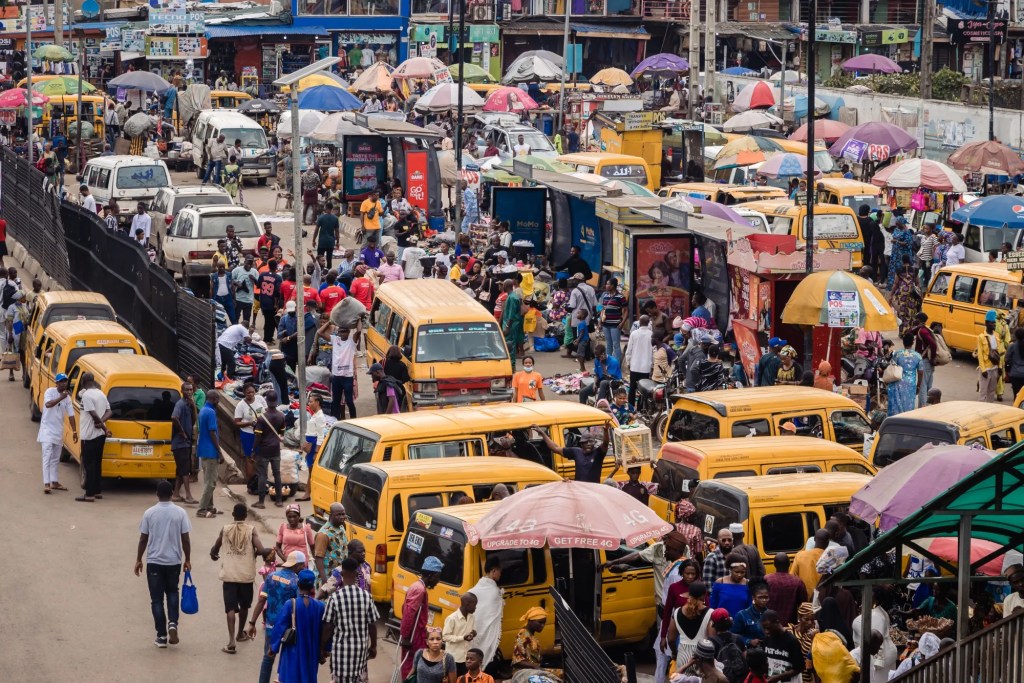
As the global economic landscape continues to evolve, the International Monetary Fund (IMF) has issued a significant prediction: Nigeria’s economy is poised to slide to fourth place among Africa’s top economies by 2024. This forecast serves as a wake-up call for policymakers and stakeholders to reassess Nigeria’s economic strategies and address pressing challenges. With the right reforms and investments, Nigeria can mitigate this trend and reclaim its position as a leading economic force on the continent. The question is: will Nigeria rise to the challenge and secure its economic future?
Nigeria has dropped to fourth place among Africa’s largest economies by gross domestic product (GDP), a key indicator measuring the total monetary value of all finished goods and services produced within a country over a specific period.
This update comes from Afreximbank Research—the data and research arm of the Cairo-based African Export-Import Bank—which shared the International Monetary Fund’s (IMF) 2024 ranking of Africa’s top economies on X (formerly Twitter) on Friday.
Nigeria, once Africa’s largest economy up until 2023, has slipped to fourth place following two major currency devaluations that slashed its GDP by more than half. These moves led the naira to lose around 70% of its value against the U.S. dollar, significantly impacting the country’s economic standing.
Meanwhile, the National Bureau of Statistics is working on rebasing Nigeria’s GDP data—a move expected to better reflect the country’s evolving economic landscape by incorporating emerging sectors such as the marine economy, arts, culture and tourism, ICT, e-commerce, and mining.
South Africa, Africa’s most industrialized economy, has taken the top spot with a GDP of $400.2 billion, followed closely by Egypt at $383.1 billion.
Algeria secured third place with a GDP of $264.9 billion, reflecting the country’s growing hydrocarbon wealth and increased investment in the energy sector.
Afreximbank Research noted that Nigeria’s fall to fourth place “underscores the deep macroeconomic imbalances and FX challenges Nigeria faces despite its vast population and resource base.”
Morocco claimed fifth place, buoyed by a diversified economy and stable macroeconomic environment. East African giants Ethiopia and Kenya followed in sixth and seventh, respectively, propelled by government-led efforts to expand infrastructure and grow the services sector.
Oil-rich Angola secured the eighth position, while major cocoa producers Côte d’Ivoire and Ghana rounded out the top ten, driven by their growing role in regional trade and the strength of their agro-industrial sectors.
Sub-Saharan Africa’s GDP is projected to grow by 3.8% in nominal terms in 2025, according to the International Monetary Fund (IMF).
In its latest World Economic Outlook released this week, the IMF revised the region’s growth forecast slightly downward from the 4% projected for 2024.
Nigeria and South Africa—two of the continent’s leading economies—are expected to experience slower GDP growth in 2025, as they continue to grapple with a range of economic challenges and headwinds.
“The growth forecast in Nigeria is revised downward by 0.2 percentage point for 2025 and 0.3 percentage point for 2026, owing to lower oil prices,”
“That in South Africa is revised downward by 0.5 percentage point for 2025 and 0.3 percentage point for 2026, reflecting slowing momentum from a weaker-than-expected 2024 outturn, deteriorating sentiment due to heightened uncertainty, the intensification of protectionist policies, and a deeper slowdown in major economies,” the IMF said
The latest GDP rankings serve as a stark reminder of the shifting dynamics within Africa’s economic landscape. Nigeria’s sharp decline highlights the urgent need for structural reforms, stable fiscal policies, and a renewed focus on unlocking the potential of emerging sectors.
As other nations like South Africa, Egypt, and Morocco surge ahead through diversification and strategic investments, it’s clear that resilience and adaptability are key to long-term growth. With regional economies continuing to evolve, the coming years will be critical for Nigeria and others seeking to reclaim or strengthen their positions on the continent’s economic leaderboard.
 The Fount
Leave a comment