
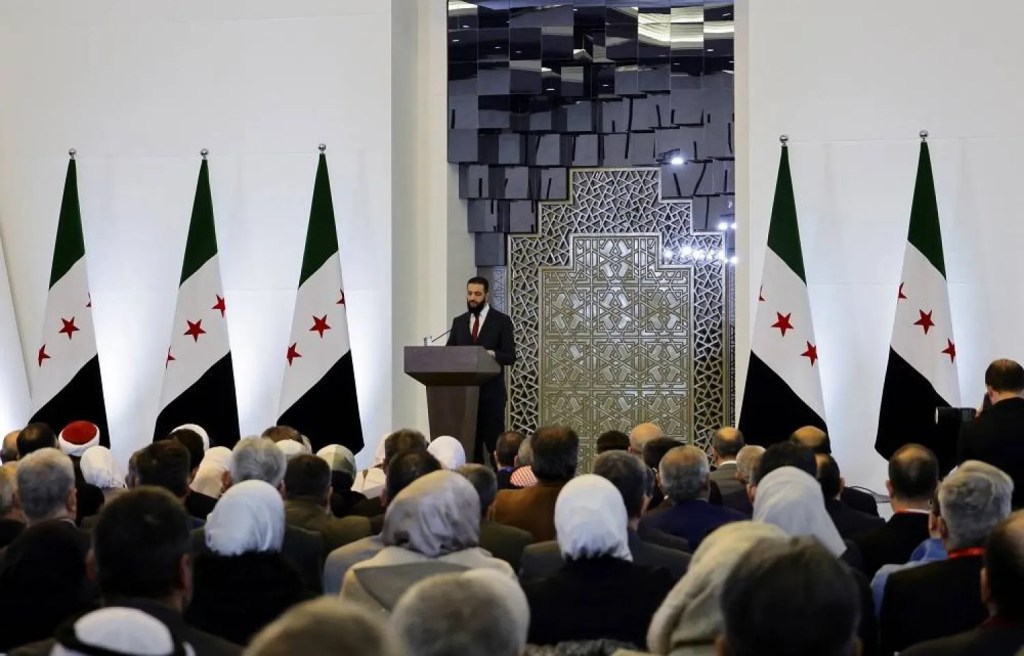
In a crucial step towards rebuilding a war-torn nation, Syria’s interim leader, Ahmed al-Sharaa has launched a landmark national dialogue, bringing together key stakeholders to chart a course for the country’s long-awaited political transition. This pivotal initiative aims to bridge the bitter divisions of the past, foster a culture of reconciliation, and pave the way for a more inclusive, stable, and prosperous future for all Syrians, offering a glimmer of hope after years of devastating conflict
At the opening of talks regarding Syria’s future, the country’s de facto leader reaffirmed his commitment to a democratic political transition.
Ahmed al-Sharaa on Tuesday called for national unity and pledged to create a transitional justice body as he welcomed participants to a national dialogue. The talks aim to steer the country’s political transition following years of civil war and the fall of former President Bashar al-Assad.
He also emphasized that the state would maintain a monopoly on weapons—a crucial issue in a country where numerous armed groups have been engaged in conflict for years.
The gathering in the capital, Damascus, was presented by al-Sharaa and his ruling Hayat Tahrir al-Sham (HTS) as a key milestone toward a democratic and inclusive transition, as well as state reconstruction. However, concerns remain that the process is being rushed.
“I urge all Syrians to stand united and hand in hand to heal the wounds and wash away the pains after decades of dictatorship,” Sharaa said in his opening address, during which he announced the formation of a transitional justice committee.
“Over the past two months, we have worked on pursuing those who committed crimes against Syrians,” al-Sharaa added.
“The unity of arms and their monopoly by the state is not a luxury but a duty and an obligation,” he added
Al-Sharaa has previously stated that Kurdish-led forces, who spent years fighting against al-Assad’s regime, should be incorporated into the national army.
George Sabra, opposition politician shared on X that he had received an invitation to attend the talks in Damascus on February 23. However, he declined, as he lives in exile in France and couldn’t travel to Syria in time.
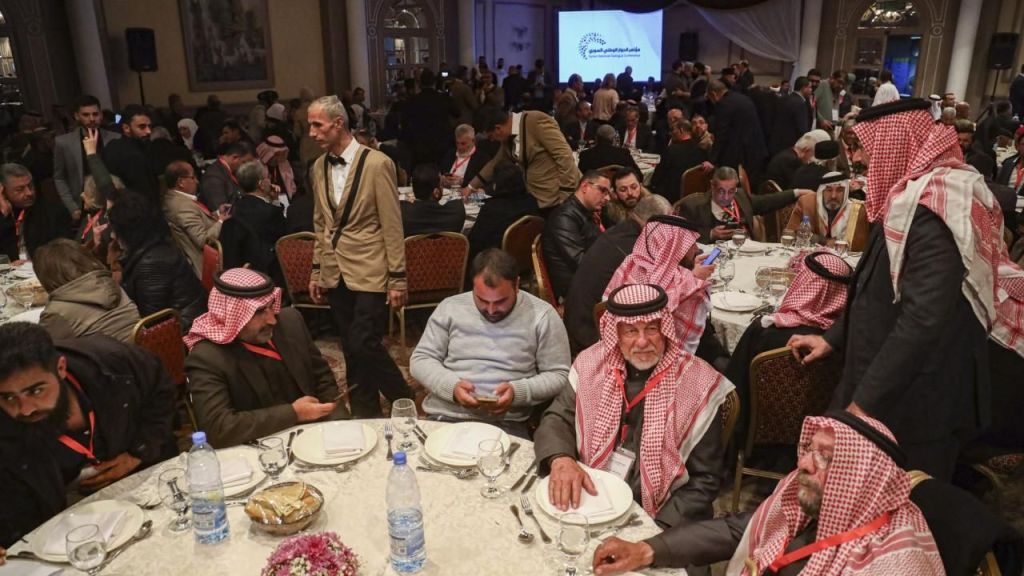
Reports from local media indicate that around 600 candidates are participating in the discussions, which will follow a packed agenda over a single day of working sessions.
Participants will address key issues, including transitional justice, drafting a new constitution, institutional reform, personal freedoms, civil society’s role, and the country’s economy.
Although the conference recommendations are not legally binding, its results are being closely monitored by the international community as they consider lifting sanctions imposed on Syria during al-Assad’s rule.
A key anticipated outcome is the drafting of a new constitution, though it’s uncertain if this can be achieved within a single day.
Suspicion………….
The short notice and single-day schedule have fueled cynicism in some circles.
Many in Syria’s marginalized communities — including Kurds, Christians, Druze, and members of Assad’s Alawite sect — remain uncertain about their future and suspicious by the new leadership’s promises of across the board governance.
HTS was previously linked to al-Qaida, but it later severed ties, with al-Sharaa advocating for coexistence ever since.
Meanwhile, parties in Syria’s autonomous Kurdish administration criticized the “token” representation of marginalized groups at the talks.
Thirty-five parties issued a mutual statement declaring that “conferences with token representation… are meaningless, worthless, and will not contribute to finding real solutions to the country’s ongoing crisis.”
Dalia Dalati, a public employee displaced during Syria’s nearly 14-year civil war, expressed skepticism about the talks, saying she doesn’t expect “any results.” She added that, three months after al-Assad’s fall, economic and security conditions remain fragile.
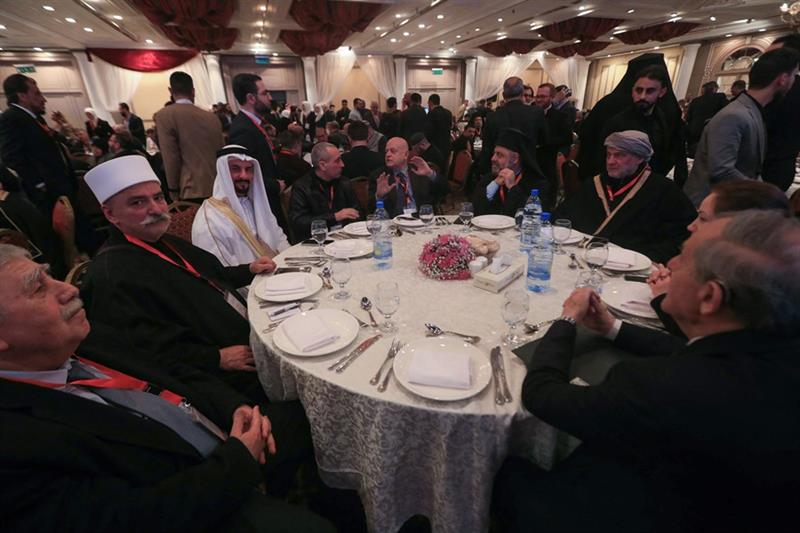
Orthodox Archbishop Elia Tohme, an invitee to the conference, said it was “too early to judge” whether the event offered a genuine opportunity for citizen input in shaping the new order.
Iman Shahoud, a judge from Hama and conference participant, described the event as “the day of true victory,” emphasizing the presence of people from all sects and segments of Syrian society, both women and men.
 The Fount
Leave a comment