
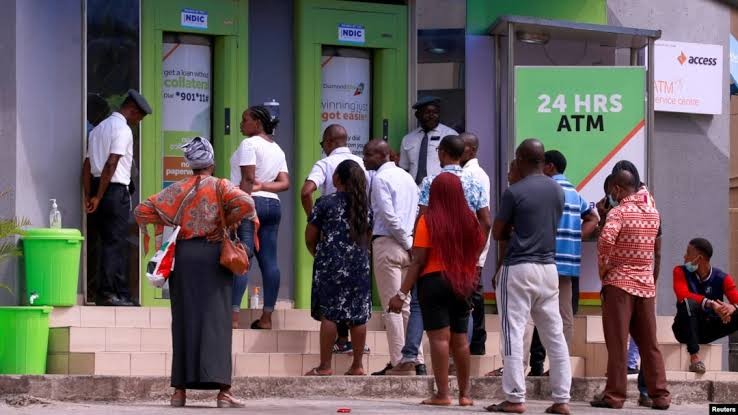
In a move that has sparked widespread outrage and concern among Nigerians, the Central Bank of Nigeria (CBN) has approved a new regime of charges for ATM withdrawals, further burdening citizens who are already grappling with a crippling economy. This decision, which many see as tone-deaf and insensitive, has raised questions about the CBN’s commitment to protecting the interests of ordinary Nigerians rather than serving the interests of commercial banks. As the country struggles to recover from a devastating recession, the timing of this policy could not be more inopportune, leaving many to wonder if the CBN is out of touch with the harsh realities faced by millions of Nigerians.
The Central Bank of Nigeria (CBN) has abolished the free ATM withdrawal policy, previously capped at three free transactions per month, for customers using ATMs of other banks.
According to the CBN, the review was necessitated by escalating costs and the imperative to enhance the operational efficiency of Automated Teller Machine (ATM) services.
By the new regulation, “The three free monthly withdrawals allowed for Remote-On-Us (other bank’s customers/Not-On-Us consumers) in Nigeria under Section 10.6.2 of the Guide shall no longer apply.”
Withdrawals made from a customer’s bank ATM will continue to be free of charge.
However, customers using another bank’s ATM will incur a fee of N100 for every N20,000 withdrawn if the ATM is located on the bank’s premises.
For withdrawals made at off-site ATMs, a fee of N100 per N20,000 will apply, in addition to a surcharge of up to N500.
The Central Bank of Nigeria (CBN) states that any surcharge imposed by the ATM deployer or acquirer must be clearly disclosed at the time of withdrawal. However, for international ATM withdrawals, customers will be charged at the exact rate determined by the international acquirer.
On February 10, the Central Bank of Nigeria (CBN) issued a circular stating: “In response to increasing costs and the need to enhance the efficiency of Automated Teller Machine (ATM) services in the banking sector, the Central Bank of Nigeria has revised the ATM transaction fees outlined in Section 10.7 of the current CBN Guide to Charges by Banks, Other Financial Institutions, and Non-Bank Financial Institutions, 2020 (the Guide).”
“This review is expected to accelerate the deployment of ATMs and ensure that appropriate charges are applied by financial institutions to consumers of the service.
“Accordingly, banks and other financial institutions are advised to apply the following fees with effect from March 1, 2025.”
As the Central Bank of Nigeria’s decision to scrap free ATM withdrawals takes effect, millions of Nigerians will be forced to bear the brunt of this policy. While the CBN cites rising costs and the need for efficiency as justification, many will question whether this move is merely a thinly veiled attempt to further line the pockets of commercial banks.
As the nation’s financial regulator, the CBN has a responsibility to protect the interests of citizens, not just the profits of banks. It is imperative that the CBN reconsiders this decision and explores alternative solutions that do not disproportionately burden the most vulnerable members of society. The future of financial inclusion and accessibility in Nigeria hangs in the balance.
 The Fount
Leave a comment