
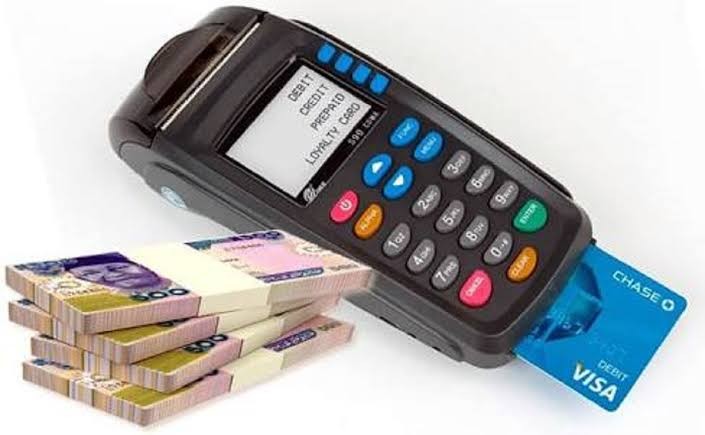
In a significant boost to the country’s revenue, the Federal Government has generated N103.7 billion from taxation on cash transfers. This development highlights the government’s efforts to diversify its revenue streams and reduce dependence on oil exports. The cash transfer tax has emerged as a vital source of income, supporting the nation’s developmental projects and initiatives.
The Federal Government of Nigeria has generated N103.7bn in revenue from the Electronic Money Transfer Levies in the first half of 2024.
According to data from the Central Bank of Nigeria’s statistical bulletin, this represents a 7.55% increase compared to the N96.44bn collected during the same period in 2023 of last year.
This figure shows the growing use of digital payment platforms and a higher volume of electronic transactions as more Nigerians and businesses embrace digital banking solutions.
Electronic money transfer levy was introduced as a source of government revenue in the Finance Act 2020, which amended the Stamp Duty Act to tap into the growth of electronic funds transfer in Nigeria.
The EMT levy is a singular and one-off charge of N50 on electronic receipt or transfer of money deposited in any deposit money bank or financial institution on any type of account on sums of N10,000 or more.
In January 2024, the revenue from EMTL stood at N18.60bn, reflecting a 26.57 % decrease compared to N25.33bn in the same period of last year.
However, February 2024 showed a 20.21 % increase, with collections rising to N16.59bn from N13.80bn in February 2023.
March 2024 also experienced growth, recording N18.60bn, up by 53.41 % from N12.13bn in March 2023.
The revenue in April 2024 was N15.37bn, which was a marginal 1.85 % increase compared to N15.09bn collected in April 2023.
May 2024 saw a more substantial year-on-year increase, with earnings reaching N18.78bn, 24.24 % higher than the N15.12bn collected in May 2023.
Although June 2024 saw a slight dip compared to May, with N15.78bn collected, it still marked a 5.40 % increase from the N14.97bn recorded in the same period of last year.
The PUNCH had earlier reported that e-payment transactions in the country jumped by 86.44 per cent to N566.39tn in the first half of 2024 from N303.60tn in the same period of last year, according to data from the Nigeria Inter-Bank Settlement System.
The NIP, launched in 2011 by NIBSS, is an online real-time interbank payment platform that enables instant value transfers.
Banks have since made the NIP platform accessible to customers through various channels, such as internet banking, mobile apps, USSD, ATMs, POS, and bank branches.
The surge in e-payment transactions was linked to the increasing adoption of digital payment platforms by businesses and individuals, driven by convenience and efficiency in financial transactions.
Last year, electronic payment transactions in the country hit an all-time high, rising by 55 % to N600tn, compared to N387tn in 2022.
However, as telecom operators in Africa increasingly invest in the mobile money sector, they confront a major fraud crisis, prompting calls for improved security measures.
According to the Global System for Mobile Communications Association’s “State of the Industry Report on Mobile Money 2023”, mobile money fraud in Africa exceeded $1bn, raising concerns that security issues could impede the adoption of mobile money services
 The Fount
Leave a comment